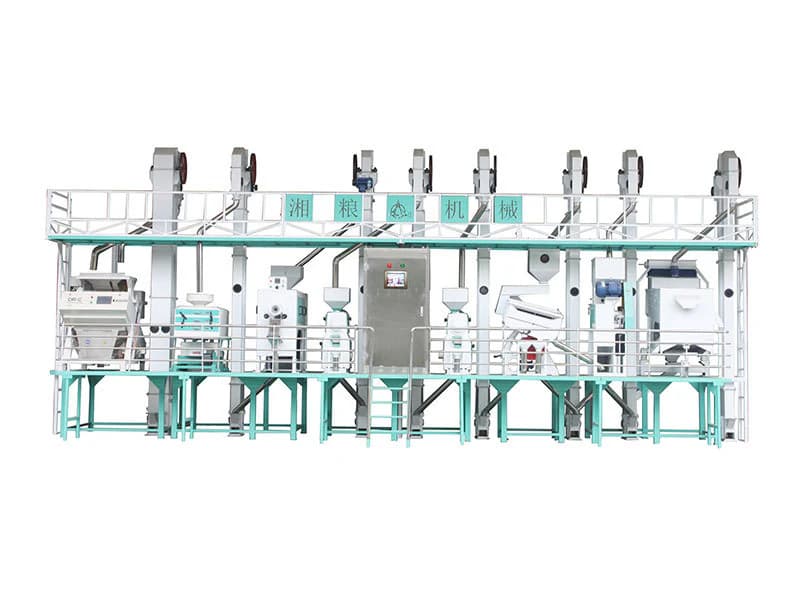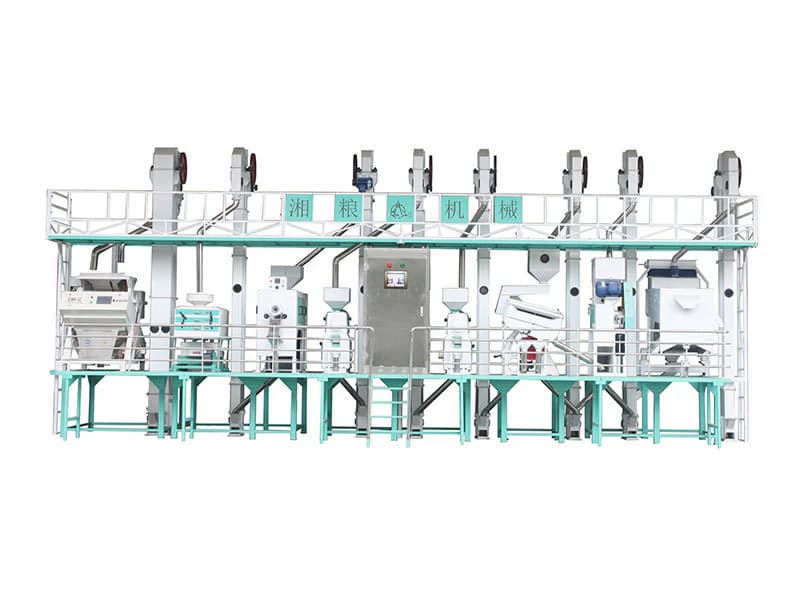
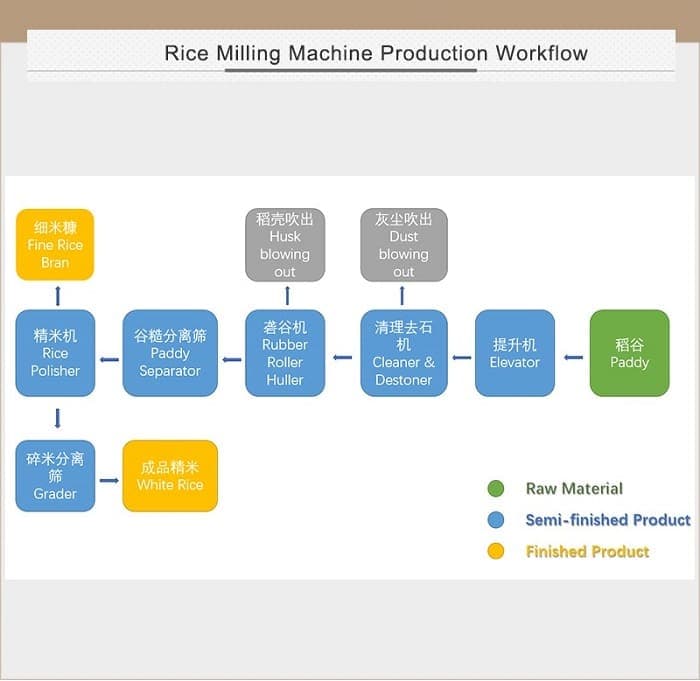
An integrated paddy-processing route
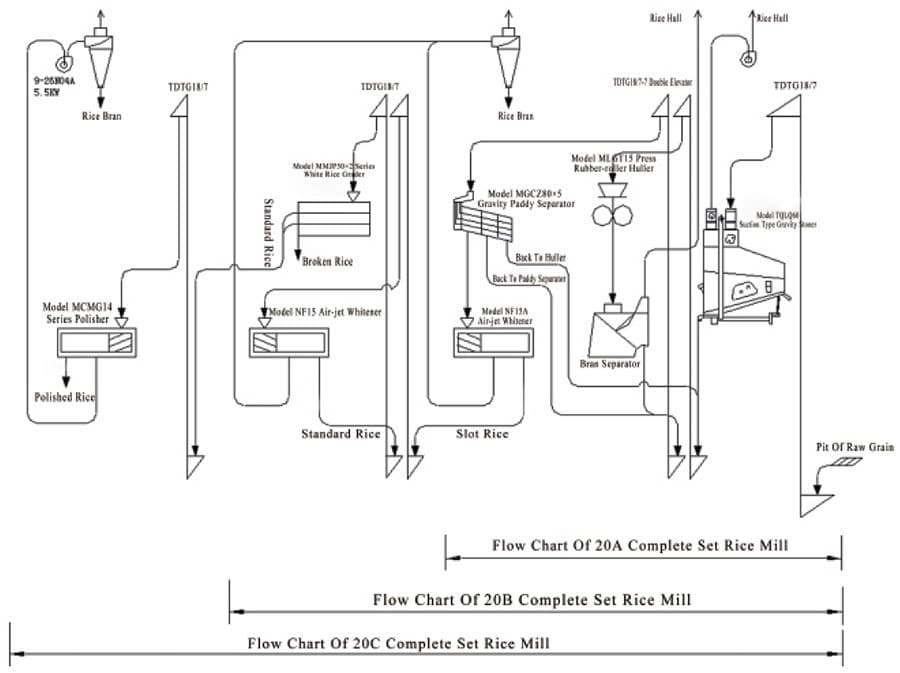
KODI lists NZJ20/15 as a combined rice-milling machine. Its family workflow moves paddy through elevation, cleaning and destoning, rubber-roll husking, paddy separation, whitening and grading. These stages address different material conditions; a clean paddy feed and effective separation matter before assessing the final white rice.
The workflow is a process reference. It does not establish that every pictured module, elevator or outlet is included in a particular base-model quotation. Describe the incoming paddy and the intended rice product when requesting a configuration.
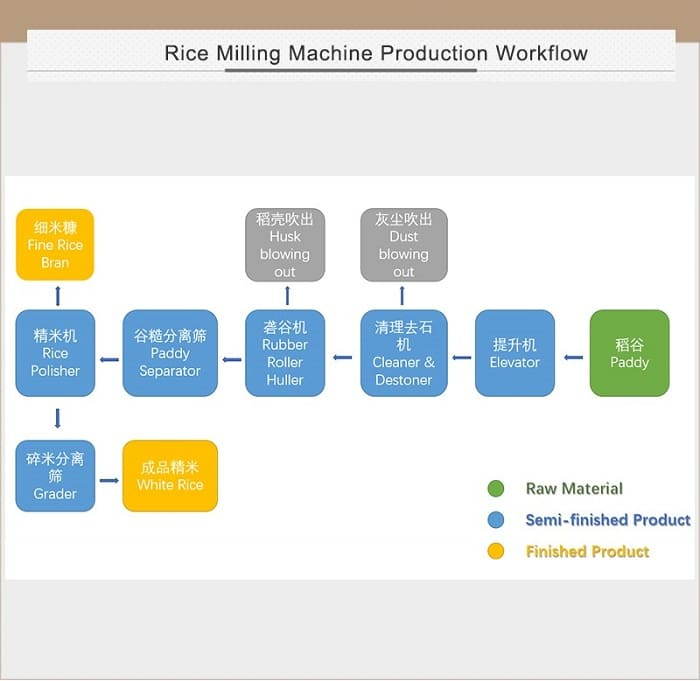
KODI’s rice-milling family workflow illustration; a process reference, not a photograph of a verified NZJ20/15 base installation.
Keep the base and A specifications separate
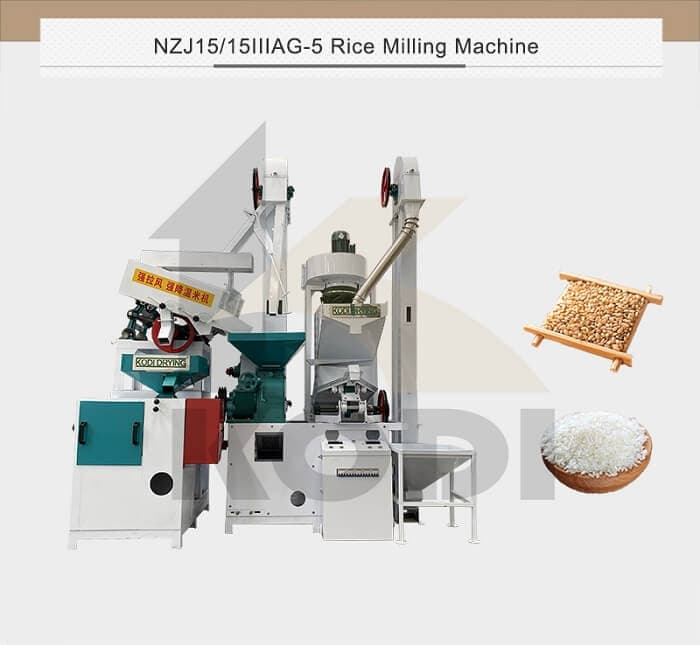
The selected official NZJ20-family table gives the base NZJ20/15 a reference capacity of 900–1000 kg/h and 29.2 kW. The same page gives a separate, more powerful NZJ20/15A row. Its A-labelled whole-machine photographs are not used here to identify the base machine.
Another KODI family comparison lists different capacity, mass and dimensions for NZJ20/15. No publication chronology resolves that difference. Obtain a current model-specific layout and motor schedule before designing foundations, electrical service or transport around either table.
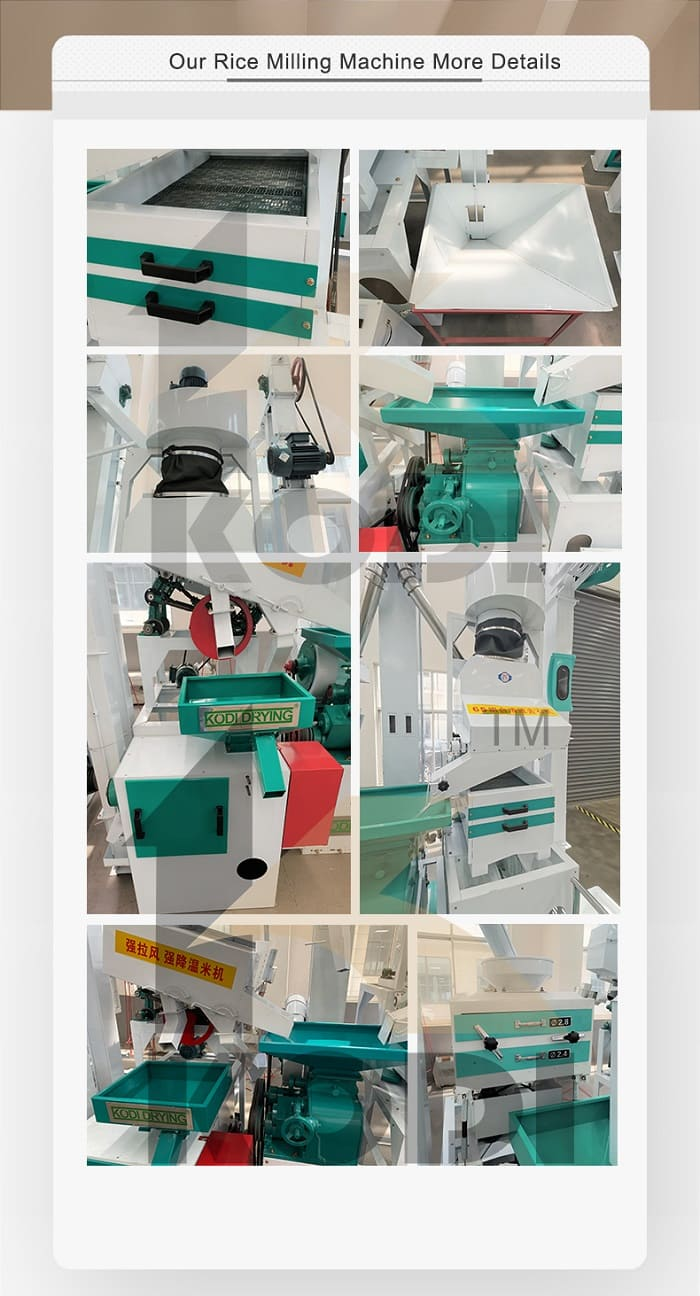
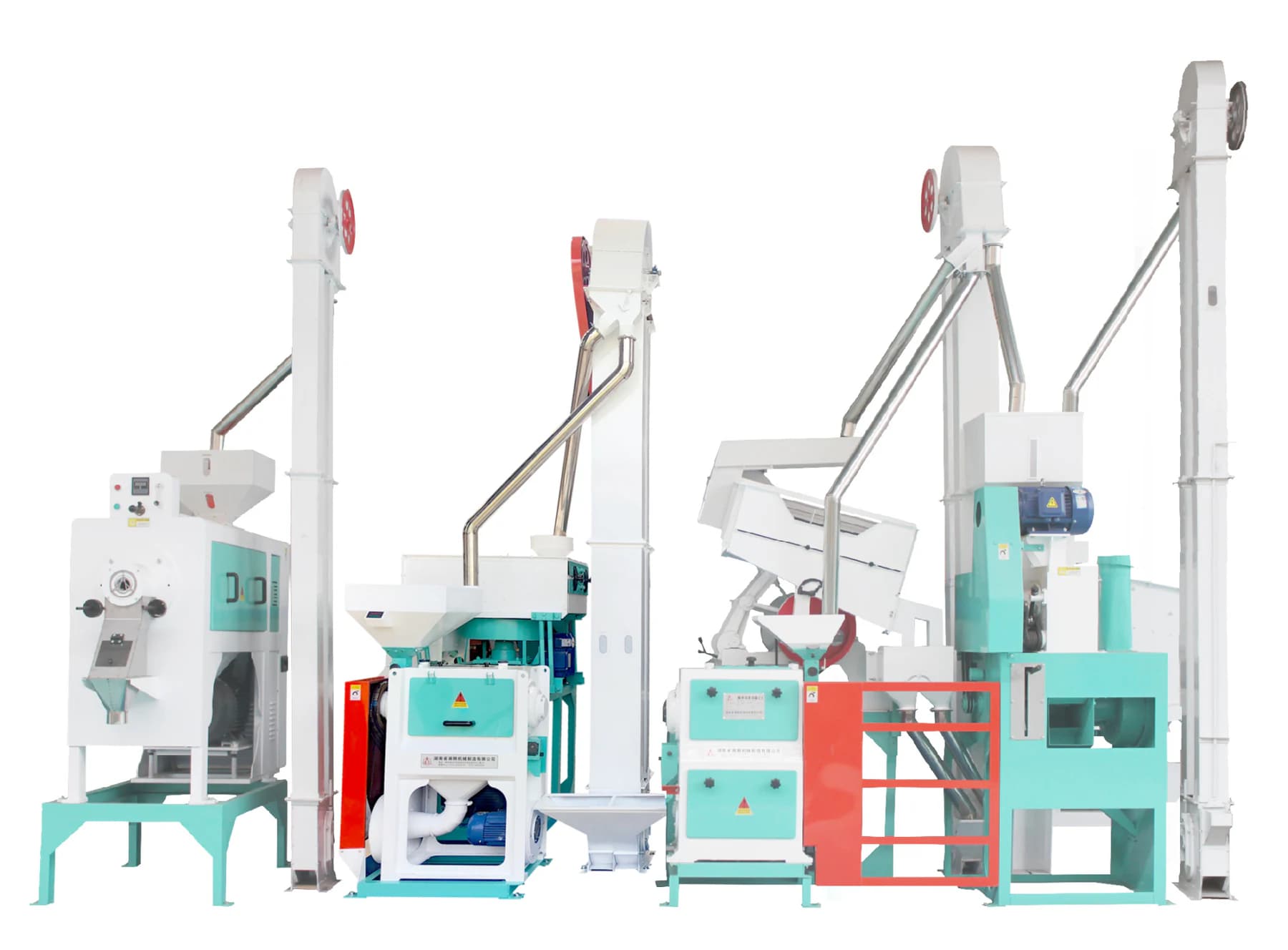
Original KODI NZJ20-family component-detail collage. Individual details illustrate the family and do not certify the exact base-model bill of materials.
Specify the grain and the required finish
Ask for the trial conditions behind the capacity figure: paddy variety, moisture, impurity level and the definition of finished output. The manufacturer’s milling-yield and broken-rice claims are not treated as guaranteed results for an unspecified grain sample.
Confirm which elevators, cleaner, destoner, separator and grader are included, together with the whitening arrangement, dust extraction interface and wear parts. Colour sorting and additional polishing should be discussed as separate scope rather than inferred from a family illustration.
Planning your configuration
- Use the current approved base NZJ20/15 datasheet to resolve the conflicting official comparison rows.
- State paddy variety, moisture and desired rice grade; request a representative material test.
- The two images are genuine manufacturer process/component references, not an exact base assembly, customer case or GLOBSEEK trial.
- Confirm electrical supply, motor schedule, dust collection and included ancillary equipment.
Manufacturer sources
Product information and images are based on the following manufacturer references, reviewed on 2026-10-20.