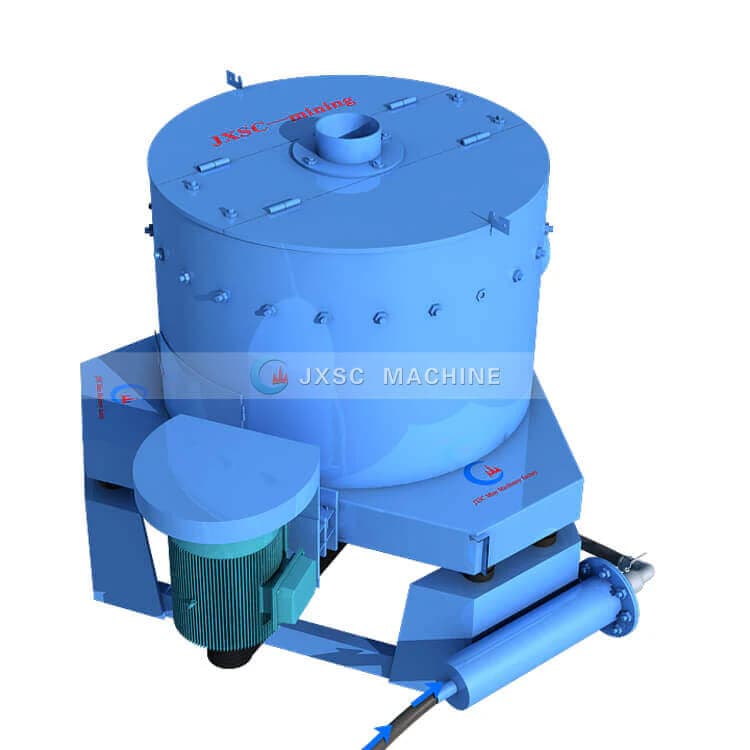
Concentrate liberated dense particles
STLB100 belongs to JXSC’s centrifugal gravity-concentrator family. A rotating bowl increases the separating force acting on a slurry, while water introduced through the bowl helps form the concentrating bed. The method targets differences in particle density; it does not liberate a valuable mineral that remains locked inside coarse host rock.
Assess where the unit would sit in the existing preparation circuit. The relevant feed is the material reaching the concentrator after screening or grinding, rather than the unprocessed mine feed. Its size distribution and degree of liberation are more useful selection inputs than the ore name alone.
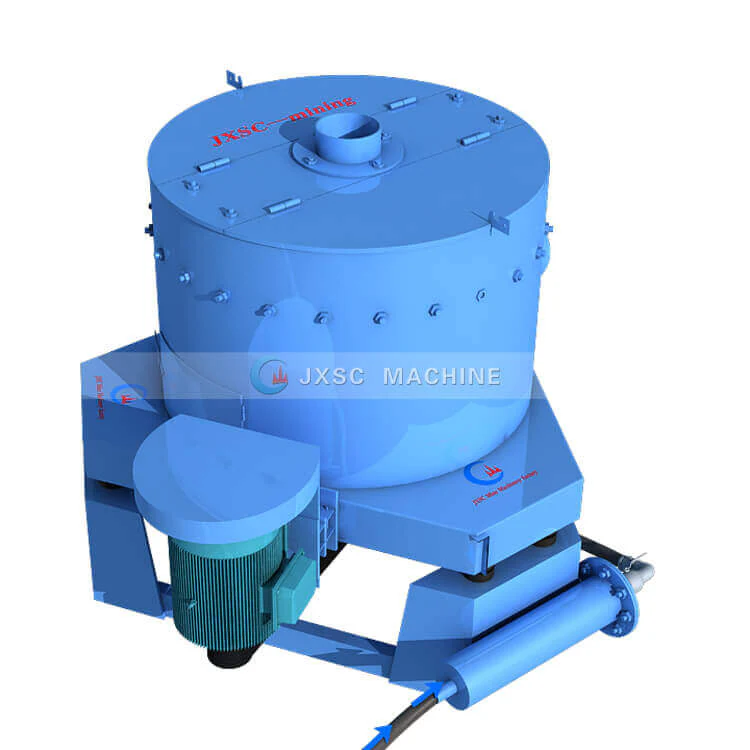
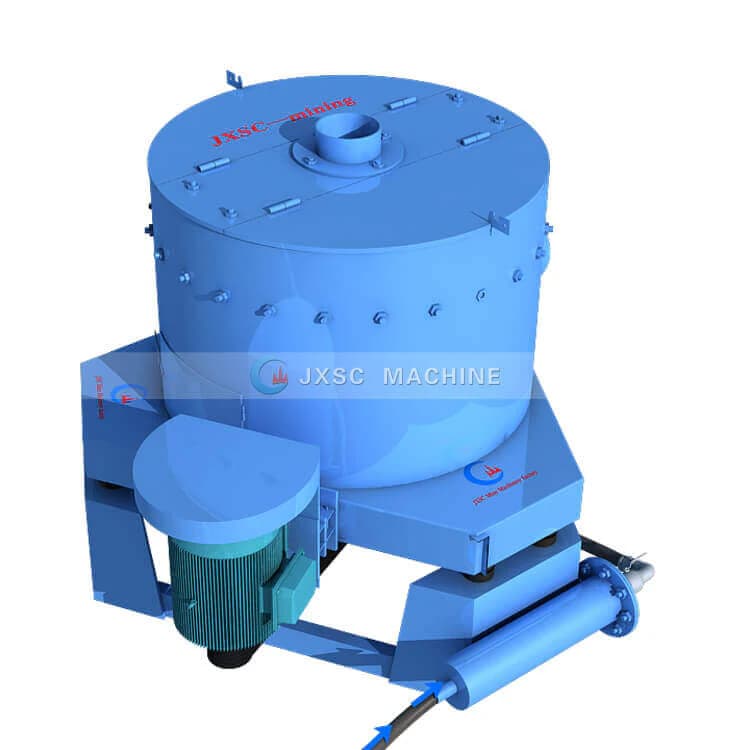
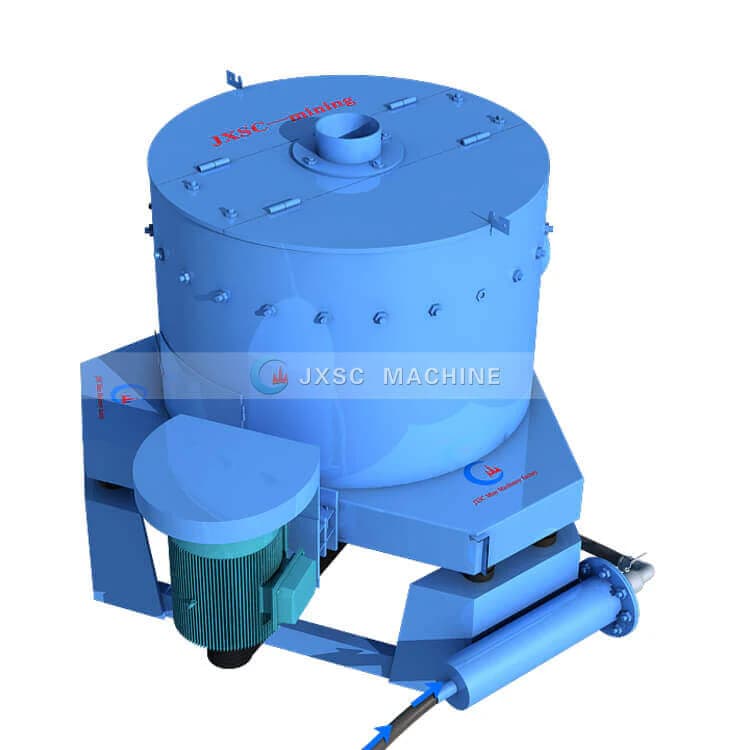
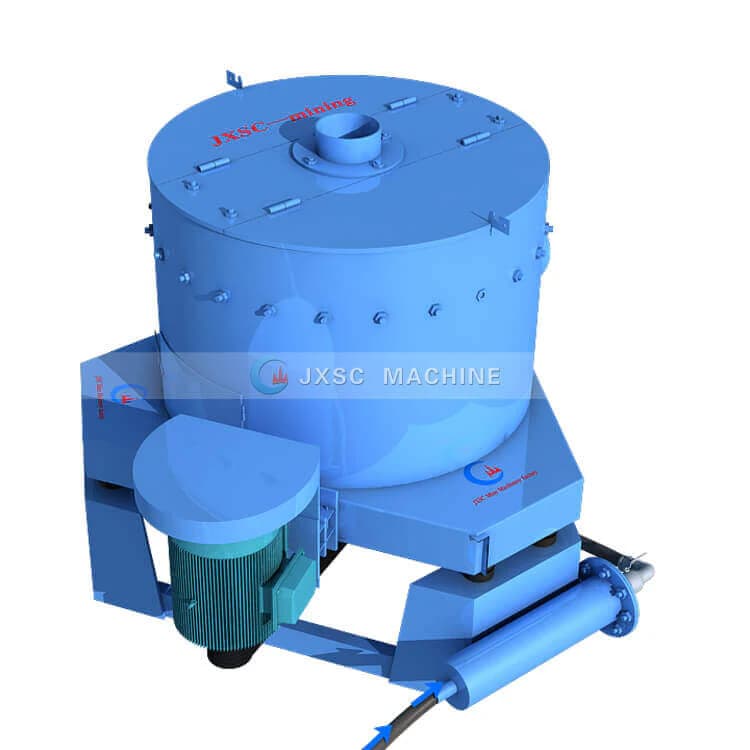
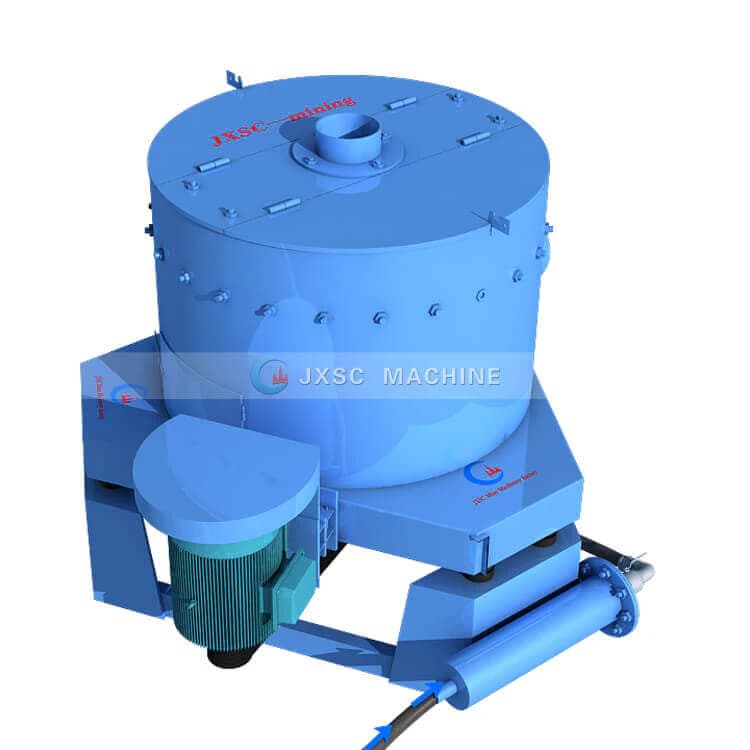
JXSC STLB-family reference photograph. The image does not establish the scale or exact configuration of the STLB100 row.
Use the STLB100 row as a design reference
The manufacturer’s STLB100 table lists 40–60 t/h throughput, 0–6 mm feed and an 18.5 kW drive at 360 r/min. It gives a 2400 × 2400 × 2250 mm envelope. These entries distinguish this model from the smaller STLB units on the same page.
The published slurry-density range is 20–50%, but its percentage basis should be confirmed. Establish the required fluidisation-water conditions and usable solids loading with the manufacturer. A family recovery percentage or a water-flow column without a resolved operating basis is not adopted here as a guaranteed result.
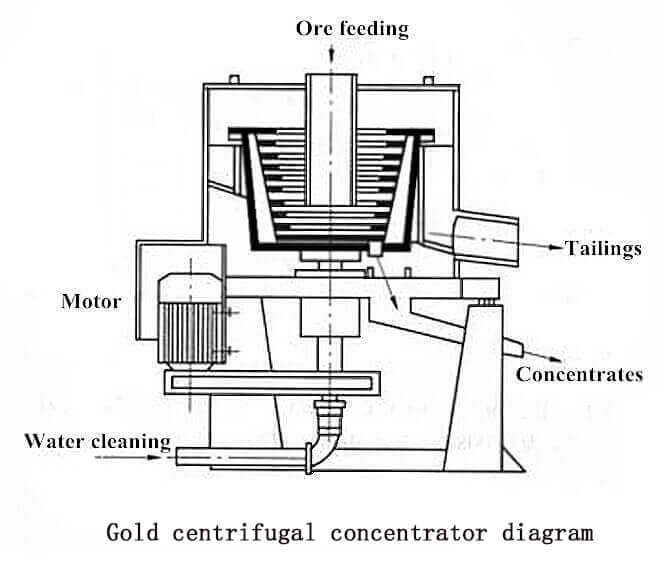
Original manufacturer diagram explaining centrifugal concentration. It is a family operating-principle illustration, not a fabrication drawing or STLB100 test record.
Test the feed and define the complete circuit
Provide a representative sample, particle-size distribution, mineral liberation information and the desired recovery objective. A comparative test should report concentrate mass, grade and recovery under stated water and feed conditions rather than an isolated best-case percentage.
Clarify concentrate discharge or cleanup procedure, water quality, feed pumping, screening, controls and access for maintenance. The concentrator is one process stage; upstream preparation and downstream concentrate treatment remain separate equipment and operating decisions.
Planning your configuration
- Request a representative material test with a complete mass balance and stated operating conditions.
- Confirm the slurry-density basis and required water pressure/flow for the selected configuration.
- Define feed preparation, pumps, controls and concentrate-handling scope separately.
- Family reference images do not verify an individual STLB100 machine, inspection or recovery result.
Manufacturer sources
Product information and images are based on the following manufacturer references, reviewed on 2026-10-20.