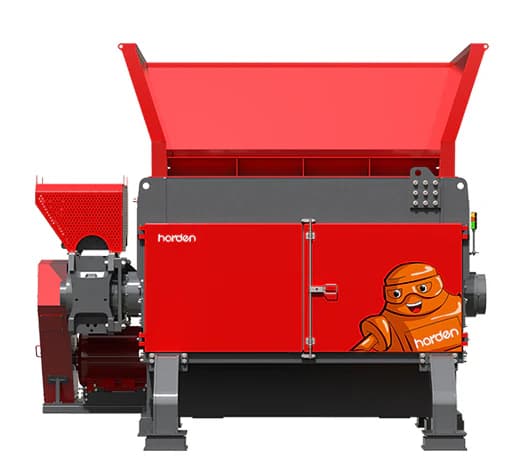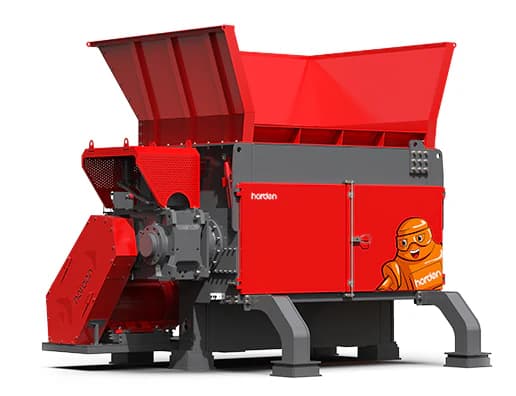
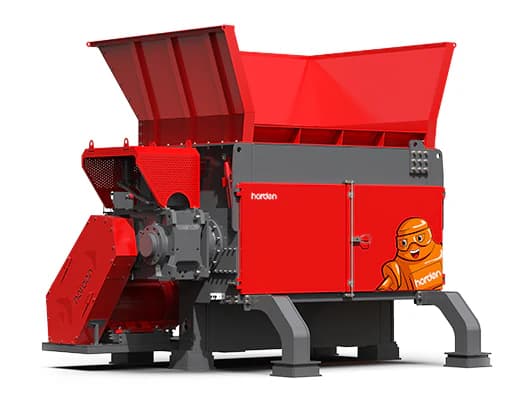
A 2000 mm cutting zone for plastic waste
SL2000 sits between SL1500 and SL2500 in Harden's model table. Its longer cutting zone provides another size option for presenting bulky plastics to the rotor. Assess feed dimensions, bulk density and contaminants together; the SL-family throughput headline is not a model-specific production guarantee.
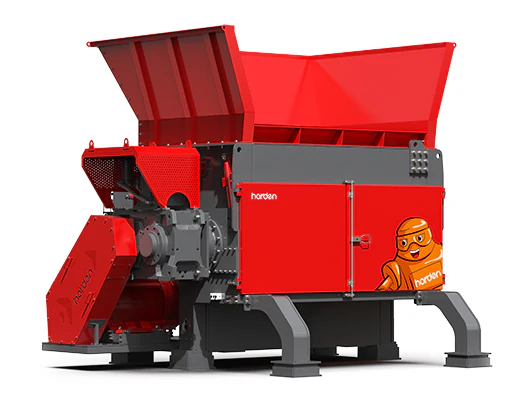
Harden SL-family reference showing the related SL2500; this photograph does not identify an SL2000.
Coordinate the feeder, rotor and screen
The SL platform uses an arc-shaped feeder to present material to the single shaft. Alternative rotor-knife arrangements and a discharge screen make the cutting configuration part of the selection process. Request a representative waste trial to check the required output and the effect of flexible film or mixed rigid pieces.
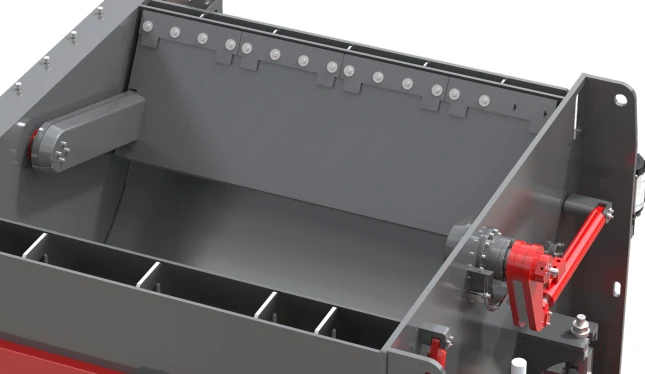
SL-series arc-feeder illustration from Harden; component reference for the SL2000 platform.
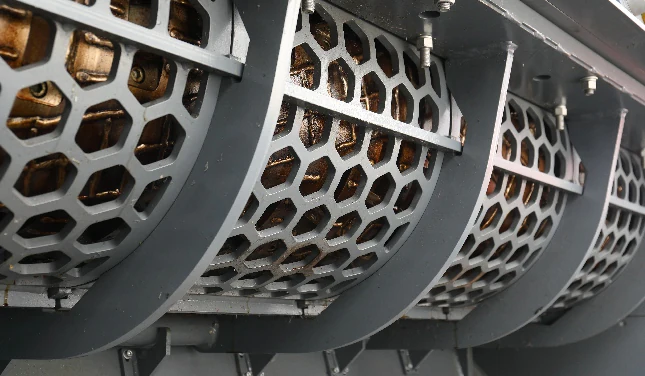
SL-series hexagonal screen illustration; confirm the ordered SL2000 aperture and screen arrangement.
Allow room for maintenance and downstream handling
Harden describes a hydraulic maintenance door and access to the rotor area. The listed SL2000 envelope and mass are starting points for layout, while hopper loading, screen removal and discharge equipment need additional space. Agree on isolation, access and wear-parts procedures before the line is installed.
Planning your configuration
- Provide waste composition, feed dimensions, moisture and metal contamination limits.
- Confirm the chosen rotor-knife count, screen aperture and trial-derived capacity.
- Check foundation loading, access envelope, controls and downstream conveying scope.
Manufacturer sources
Product information and images are based on the following manufacturer references, reviewed on 2026-10-20T02:27:35.306351+00:00.