
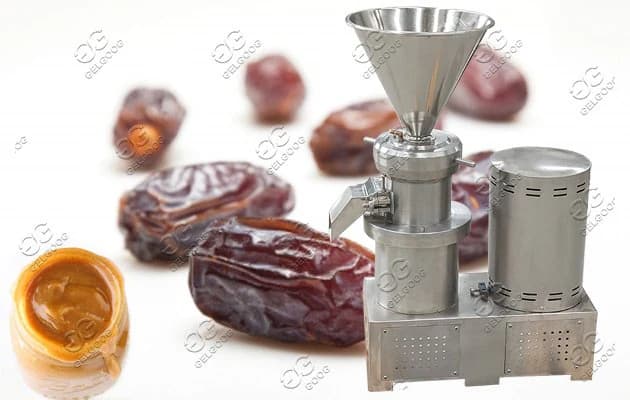
Scale paste production around a tested recipe
GGJMS-180 is a larger option within GELGOOG's grinder table. The broad capacity band should be checked using the intended ingredient, preparation and required consistency. Do not treat the upper figure as a guaranteed rate for every nut or date recipe.
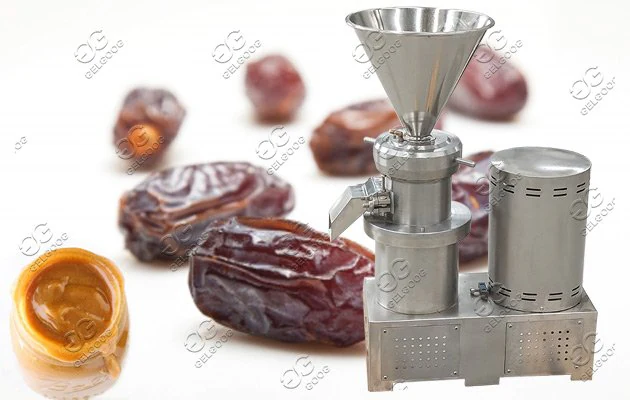
GELGOOG colloid-mill series with dates; the pictured grinder's exact model is not identified.
Control the milling conditions
Material passes through the rotor/stator grinding area, where gap adjustment influences the result. Set an acceptable feed condition and monitor product temperature during a trial. Confirm the supplied cooling connections and operating procedure if the recipe is sensitive to heat or viscosity changes.
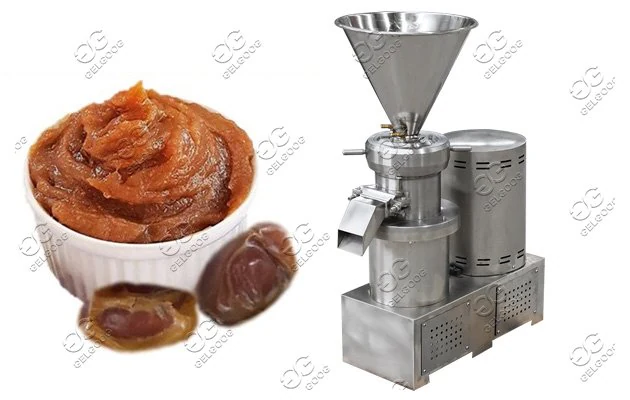
Manufacturer series grinder and paste illustration; not an exact GGJMS-180 performance trial.
Fit cleaning and transfer into the process
The listed footprint helps place the mill between preparation and filling equipment, but cleaning access and product transfer need additional room. Agree on contact materials, seals and dismantling steps for the intended food. The gallery's paste examples illustrate possible applications rather than verified output from this exact model.
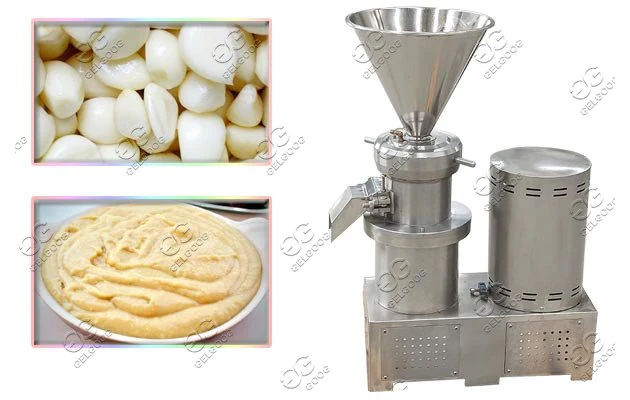
Series grinder with garlic-paste application example; image does not establish GGJMS-180 throughput.
Planning your configuration
- Supply ingredient samples, moisture or oil content and target texture for a trial.
- Confirm motor nameplate, electrical supply and actual grinding specification; the website power-column heading is ambiguous.
- Define food-contact materials, seals, cooling, cleaning and pump/pipe scope.
Manufacturer sources
Product information and images are based on the following manufacturer references, reviewed on 2026-10-20T02:28:25.434928+00:00.